

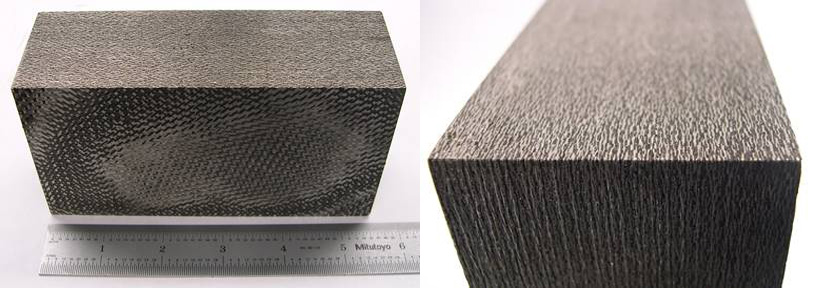
Modern engineering and technology demand materials that are stronger, lighter, more durable, and more reliable than ever before. From aerospace systems and medical devices to renewable energy and advanced manufacturing, traditional materials often struggle to meet these rising expectations. Metals can suffer from corrosion and fatigue, polymers may degrade under heat, and conventional ceramics are limited by brittleness. In this evolving landscape, composite ceramics have emerged as one of the most promising solutions.
Composite ceramics combine the inherent advantages of traditional ceramics with carefully selected reinforcing phases to create materials with superior performance. By overcoming long-standing weaknesses such as low fracture toughness and impact sensitivity, these advanced materials are opening new possibilities across multiple industries. In 2026, composite ceramics are no longer experimental innovations. They are becoming essential building blocks of modern technology.
This article explores why composite ceramics are shaping the future of materials science, how they work, what makes them unique, and why engineers and researchers increasingly rely on them for high-performance applications.
Understanding Composite Ceramics and Their Structure
Composite ceramics are engineered materials that consist of a ceramic matrix reinforced with fibers, particles, or secondary phases. Unlike traditional monolithic ceramics, which rely on a single material structure, composite ceramics are designed to combine multiple components with complementary properties.
The ceramic matrix provides high-temperature stability, chemical resistance, and hardness. The reinforcing phase improves toughness, strength, and resistance to crack propagation. Together, these components form a material system that performs far beyond what either phase could achieve alone.
Common reinforcement materials include ceramic fibers, whiskers, metallic particles, and carbon-based structures. The interaction between the matrix and reinforcement determines the final performance of the composite.
This controlled microstructure is the foundation of composite ceramics and the reason they represent a major step forward in materials science.
Limitations of Traditional Ceramics and the Need for Innovation
Traditional ceramics have long been valued for their hardness, wear resistance, and thermal stability. However, they also suffer from critical limitations that restrict their use in demanding applications.
The most significant weakness is brittleness. Conventional ceramics tend to fracture suddenly under tensile stress or impact, with little warning. Once a crack forms, it can propagate rapidly, leading to catastrophic failure.
This behavior limits their use in structural and dynamic systems where reliability is essential. Engineers have traditionally compensated by adding safety margins or avoiding ceramics altogether in critical components.
Composite ceramics were developed in response to these limitations. By modifying crack behavior and energy absorption mechanisms, they provide a pathway to safer and more reliable ceramic-based materials.
How Composite Ceramics Improve Mechanical Performance
Crack Deflection and Energy Absorption
One of the key advantages of composite ceramics is their ability to resist crack growth. When a crack encounters a reinforcing phase, it may change direction, slow down, or stop entirely.
This process, known as crack deflection, increases the energy required for fracture. As a result, composite ceramics exhibit significantly improved toughness compared to monolithic ceramics.
Energy absorption mechanisms such as fiber pull-out and interfacial debonding further enhance resistance to sudden failure.
Enhanced Strength and Reliability
Reinforcements also help distribute stress more evenly throughout the material. This reduces localized stress concentrations that typically initiate cracks.
As a result, composite ceramics demonstrate higher flexural strength and more predictable failure behavior. This reliability is critical in aerospace, automotive, and medical applications where safety is paramount.
Improved Fatigue Resistance
Repeated loading can weaken many materials over time. Composite ceramics show improved resistance to fatigue due to their ability to slow microcrack growth.
This property supports long-term performance in rotating machinery, structural components, and thermal cycling environments.
Thermal and Environmental Advantages
High-Temperature Stability
Like traditional ceramics, composite ceramics retain strength and structural integrity at elevated temperatures. Many compositions remain stable in environments where metals soften or oxidize.
This makes them suitable for turbines, heat exchangers, and combustion systems.
Thermal Shock Resistance
Rapid temperature changes can cause cracking in conventional ceramics. Composite ceramics often exhibit better thermal shock resistance due to their modified microstructure.
Reinforcements help dissipate thermal stresses and reduce the likelihood of sudden fracture.
Chemical and Oxidation Resistance
Composite ceramics inherit the chemical inertness of ceramic matrices. They resist corrosion, oxidation, and chemical attack in aggressive environments.
This durability extends service life and reduces maintenance requirements.
Manufacturing and Processing of Composite Ceramics
Material Selection and Design
The development of composite ceramics begins with careful selection of matrix and reinforcement materials. Engineers consider compatibility, thermal expansion, bonding behavior, and processing requirements.
Matching these properties ensures strong interfacial bonding without introducing excessive residual stress.
Fabrication Techniques
Several manufacturing methods are used to produce composite ceramics. These include hot pressing, chemical vapor infiltration, melt infiltration, and powder processing.
Each technique influences density, porosity, and microstructure. Selecting the appropriate process is essential for achieving targeted performance.
Advanced processing methods allow precise control over fiber orientation, particle distribution, and interface characteristics.
Challenges in Production
Despite their advantages, composite ceramics are complex to manufacture. Processing requires tight control of temperature, atmosphere, and material purity.
Defects such as voids, weak interfaces, or uneven reinforcement distribution can compromise performance. Continuous research is focused on improving consistency and scalability.
Applications Driving the Growth of Composite Ceramics
Aerospace and Defense Systems
Aerospace engineering demands materials that combine lightweight design with extreme durability. Composite ceramics meet these requirements in components such as thermal shields, engine parts, and structural panels.
Their resistance to heat and fatigue supports reliable operation under severe conditions.
Automotive and Transportation Technologies
In modern vehicles, composite ceramics are used in braking systems, exhaust components, and thermal barriers. Their stability improves safety and performance while reducing weight.
Electric and hybrid vehicles also benefit from ceramic-based insulation and energy management systems.
Energy and Power Generation
Composite ceramics play a growing role in energy systems. Fuel cells, turbines, and nuclear reactors rely on materials that withstand high temperatures and radiation.
These materials support efficiency and long-term stability in critical infrastructure.
Medical and Biomedical Engineering
In medical devices, composite ceramics are used for implants, prosthetics, and surgical tools. Their biocompatibility, wear resistance, and strength improve patient outcomes.
Toughened ceramic implants are particularly valuable in joint replacement and dental applications.
Electronics and Advanced Manufacturing
Electronic devices increasingly rely on materials that manage heat and electrical insulation simultaneously. Composite ceramics provide stable substrates and packaging solutions.
They also support precision manufacturing processes such as semiconductor fabrication and laser systems.
The Role of Research and Innovation
Materials science research continues to expand the capabilities of composite ceramics. Nanostructured reinforcements, functionally graded materials, and hybrid systems are improving performance at multiple scales.
Computational modeling helps predict crack behavior, thermal response, and long-term durability. These tools accelerate development and reduce experimental costs.
Additive manufacturing is emerging as a promising technique for producing complex ceramic composites. While still evolving, it offers new design freedom and customization potential.
Collaboration between academia and industry ensures that research findings translate into practical solutions.
Sustainability and Environmental Considerations
As sustainability becomes a priority, composite ceramics contribute through durability and efficiency. Their long service life reduces replacement frequency and material waste.
In energy systems, their thermal efficiency supports lower emissions and improved resource utilization.
Manufacturing processes are also becoming more environmentally responsible through improved energy management and recycling initiatives.
These factors align composite ceramics with long-term sustainability goals.
Challenges and Limitations
Despite their advantages, composite ceramics are not without challenges. High production costs remain a barrier for widespread adoption in low-cost markets.
Complex processing requires specialized equipment and expertise. Quality control demands rigorous testing and monitoring.
Joining composite ceramics to other materials can be difficult due to thermal expansion differences. Engineers must carefully design interfaces and assemblies.
Ongoing research aims to address these issues and expand accessibility.
Frequently Asked Questions About Composite Ceramics
What are composite ceramics used for?
Composite ceramics are used in aerospace, automotive, energy, medical, and electronics industries for high-performance components requiring strength and heat resistance.
How are composite ceramics different from traditional ceramics?
They include reinforcing phases that improve toughness, strength, and reliability, reducing brittleness.
Are composite ceramics expensive?
They are generally more expensive than conventional ceramics due to complex processing, but long-term benefits often justify the cost.
Can composite ceramics replace metals?
In some high-temperature and high-wear applications, they can outperform metals. However, metals remain preferable in highly ductile applications.
Are composite ceramics environmentally friendly?
They are durable and inert, contributing to sustainability through long service life and reduced waste.
What is the main drawback of composite ceramics?
High manufacturing cost and processing complexity are the main limitations.
Conclusion
Composite ceramics represent one of the most important advances in modern materials science. By combining the inherent strengths of traditional ceramics with carefully engineered reinforcements, they overcome long-standing limitations related to brittleness and reliability. This transformation enables their use in demanding environments where safety, performance, and durability are critical.
From aerospace systems and energy infrastructure to medical devices and electronic technologies, composite ceramics are redefining what is possible in material design. Their ability to withstand extreme temperatures, resist chemical attack, and maintain mechanical integrity positions them as essential components of future innovation.
While challenges related to cost and manufacturing complexity remain, ongoing research and technological progress continue to expand their accessibility. For engineers, scientists, and manufacturers seeking high-performance solutions, composite ceramics offer a powerful combination of strength, resilience, and adaptability. As industries evolve and performance expectations rise, these advanced materials will remain at the forefront of technological advancement, shaping the future of materials science for decades to come.