

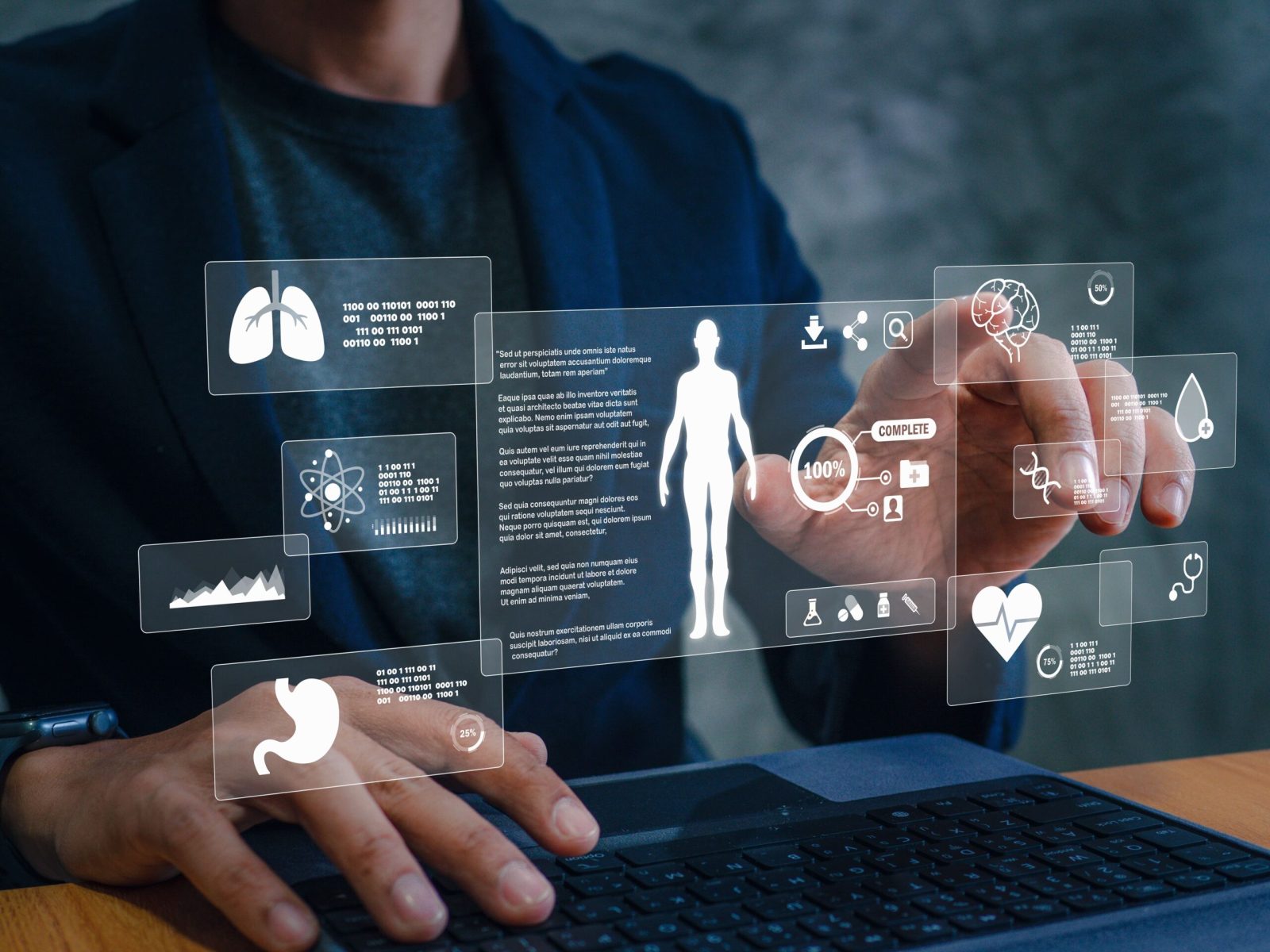
Healthcare used to feel… slow. Not in the “waiting room” sense (though, yes, that too), but in how long it took for meaningful change to happen. New treatments would take years to become mainstream. Data moved at a crawl. And most care was reactive. You got sick, then you dealt with it.
That’s changing. Fast.
We’re now in this strange but exciting phase where technology isn’t just supporting healthcare, it’s actively reshaping it. AI is making decisions alongside doctors, wearable devices are turning everyday people into walking data points, and clinics are starting to feel less like sterile institutions and more like high-performance labs for human optimization.
And honestly, it’s about time.
The Shift From “Fixing Problems” to “Optimizing Humans”
For decades, healthcare has been built around one core idea: something goes wrong, and we fix it. That model works… until it doesn’t. Chronic conditions, long recovery times, and rising healthcare costs have exposed the limits of reactive care.
What’s emerging instead is a proactive model. One where the goal isn’t just to treat illness, but to prevent it, optimize performance, and improve long-term quality of life.
You can see this shift happening across the board. Even at the clinic level, providers like Infuse Med are blending advanced therapies with modern technology to focus on recovery, regeneration, and overall health optimization rather than just symptom management.
That’s a big philosophical shift, and it’s being driven almost entirely by tech.
AI Is Becoming the Second Set of Eyes (and Sometimes the First)
Let’s start with the obvious one: artificial intelligence.
AI in healthcare isn’t some distant, sci-fi concept anymore. It’s already here, quietly doing the work behind the scenes. Algorithms can now analyze medical images, flag anomalies, and even predict disease risk before symptoms show up.
For example, researchers have used AI to detect early signs of conditions like cancer and cardiovascular disease with surprising accuracy. In some cases, it’s outperforming human specialists. Not because doctors aren’t skilled, but because machines can process massive datasets in seconds.
The Mayo Clinic has been actively integrating AI into diagnostics and patient care, exploring how machine learning can support faster and more accurate clinical decisions.
And here’s the interesting part: AI isn’t replacing doctors. It’s augmenting them.
Think of it like this, if a physician has 15 years of experience, AI gives them access to millions of data points from similar cases around the world. That combination is powerful.
Wearables Turn Data into Daily Decisions
If AI is the brain behind the scenes, wearables are the constant stream of input feeding it.
A few years ago, fitness trackers were mostly about steps and calories. Now they’re tracking heart rate, sleep quality, activity levels, and other health signals in ways that feel much more useful in real life. And that’s the key point: these devices aren’t just collecting data in a lab or during a doctor’s visit.
They’re capturing what’s happening during normal, everyday routines. Harvard Medical School has a strong piece on how wearable devices are expanding medical research, and one of the most interesting takeaways is how they allow clinicians and researchers to gather health data remotely, over longer periods, and in more realistic settings.
And it’s not just useful for researchers.
That kind of real-time, real-world feedback can also make patients more aware of patterns they might have missed otherwise. A sudden spike in resting heart rate, poor sleep trends, or changes in daily activity can become prompts to pay attention sooner rather than later.
Wearables aren’t replacing doctors, of course, but they are making health data more accessible, more continuous, and a lot more actionable than it used to be.
Telehealth Made Healthcare… Convenient?
This one feels obvious now, but it wasn’t always.
Before 2020, telehealth was more of a niche option. Then the world flipped, and suddenly remote care became the default for millions of people. What started as a necessity turned into a permanent shift.
Now, seeing a doctor can be as simple as opening your laptop.
Telehealth platforms have reduced friction in ways that are hard to overstate. No commute, no waiting room, no rearranging your entire day for a 15-minute appointment. And for people in rural or underserved areas, it’s been a game changer.
According to the Centers for Disease Control and Prevention, telehealth usage surged dramatically during the pandemic and continues to remain a key part of healthcare delivery today.
But convenience is only part of the story.
Telehealth also enables continuous care. Instead of sporadic check-ins, patients can stay connected with providers more consistently, which leads to better outcomes over time.
Data Is Becoming the Backbone of Better Care
Here’s something that doesn’t get talked about enough: data is quietly becoming the most valuable asset in healthcare.
Every wearable, every digital health app, every electronic health record, it all feeds into a growing ecosystem of information. And when used correctly, that data can unlock insights we’ve never had before.
Patterns emerge. Risks become predictable. Treatments become more personalized.
Organizations like the World Health Organization have emphasized the importance of digital health data in improving global healthcare systems. Their perspective highlights how data can bridge gaps in care, especially in underserved regions.
But let’s be real, data isn’t magic on its own. It needs context. It needs interpretation. And it needs to be used responsibly.
That’s where the combination of AI, human expertise, and modern clinics comes into play.
The Rise of Tech-Enabled Clinics
This is where everything starts to come together.
We’re seeing a new type of clinic emerge, one that blends traditional medical expertise with cutting-edge technology. These aren’t your typical doctor’s offices. They’re more dynamic, more data-driven, and often more focused on long-term outcomes.
Instead of a one-size-fits-all approach, these clinics use data, diagnostics, and advanced therapies to create personalized treatment plans. They’re not just asking, “What’s wrong?” They’re asking, “How do we improve this person’s overall health trajectory?”
And patients are noticing.
People are becoming more proactive about their health. They’re asking better questions. They’re seeking out providers who offer more than just basic care. And technology is making it easier to deliver that experience at scale.
What This Means for the Future
So where does all of this go?
If you zoom out, a few trends start to become clear:
- Healthcare is becoming more personalized
- Technology is becoming more integrated (not optional)
- Patients are becoming more informed and involved
And maybe most importantly, the line between healthcare and everyday life is starting to blur.
Your watch tracks your health. Your phone connects you to your doctor. Your data shapes your treatment. It’s all connected.
There’s still a long way to go, of course. Challenges around privacy, accessibility, and cost aren’t going away overnight. But the direction is clear.
We’re moving toward a system that’s smarter, faster, and more aligned with how people live.
We’re Watching a System Get Rebuilt
Honestly, this is one of those moments where it feels like we’re at the edge of something bigger.
Healthcare isn’t just evolving,it’s being rebuilt in real time. And while that can feel overwhelming, it’s also incredibly promising.
Because at the end of the day, all this technology (AI, wearables, telehealth, data), it’s not about the tools themselves. It’s about what they enable.
Better decisions. Earlier interventions. Longer, healthier lives.
And that’s a future most of us can get behind.