

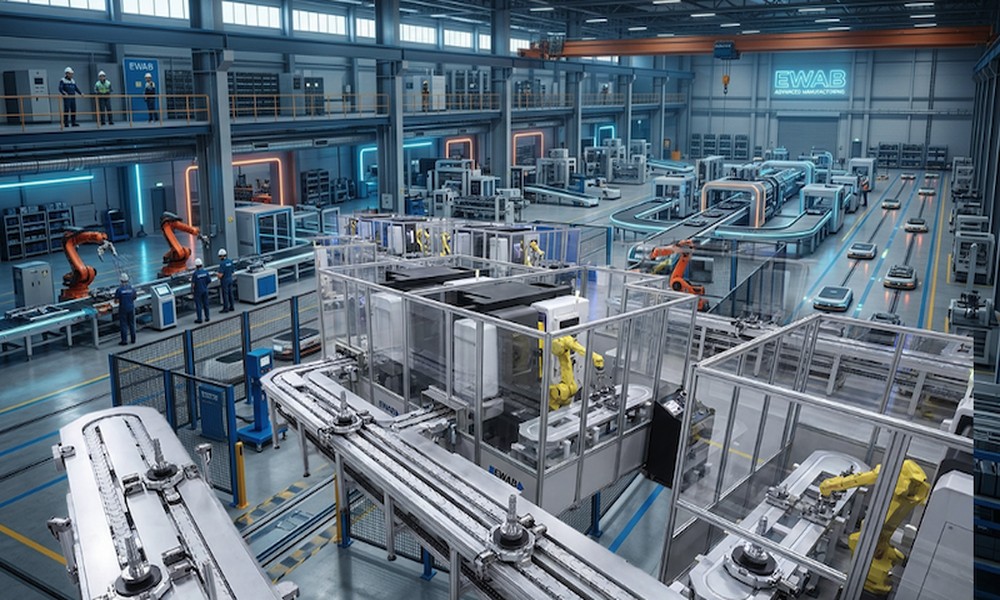
Floor managers and operations directors face a continuous challenge: maximizing the output of expensive machinery while navigating unpredictable labor availability. When a high-value CNC machine, injection molding press, or stamping die sits idle simply because there is no one available to load a raw part or unload a finished one, profitability drops.
Historically, solving this issue required complete factory overhauls-ripping up existing layouts to make room for massive, caged industrial robots. Today, the approach has shifted toward pragmatic integration. Integrating automated machine tending directly into your existing production cells allows you to protect your capital investments, elevate your workforce, and secure steady throughput without halting operations for months.
Assessing Your Current Layout for Robotic Integration
You do not need a brand-new facility to leverage automation. Most existing production cells can accommodate automated tending with minimal physical disruption, provided you evaluate three critical constraints before purchasing equipment:
- Physical Footprint and Clearances: Legacy automation required heavy safety fencing that consumed vast amounts of floor space. Modern collaborative solutions operate safely alongside human workers, drastically reducing the needed area. You must measure the swing radius of the robotic arm and ensure it can access the machine door without blocking transport lanes or human operator walkways.
- Machine Interface and Communication: How does your machine talk to the world? Older equipment might rely on simple, discrete I/O signals (hardware relays for “door open” or “cycle complete”), while newer systems use standardized industrial protocols like Ethernet/IP or Profinet. Identifying these interfaces early determines the complexity of your integration layer.
- Part Presentation and Fixturing: A robot needs to know exactly where the raw part is located. This requires moving away from loose bins toward organized trays, gravity feeders, or simple grid plates. If part orientation varies, integrating basic 2D vision systems can eliminate the need for expensive custom fixtures.
By analyzing these variables, engineering teams can design a retrofit that feels like a natural extension of the current workflow rather than a disruptive afterthought.
The Strategic Shift to Collaborative Robotics
The core driver behind successful retrofitting is the utilization of collaborative technology. For a comprehensive look at the modern grippers, sensors, and components that make this plug-and-play approach possible, you can view more technical specifications online to see how modular design simplifies the physical setup.
| Legacy Industrial Systems | Modern Collaborative Integration |
|---|---|
| Requires extensive safety cages and floor bolting | Uses built-in force feedback to operate safely near humans |
| Months of downtime for programming and alignment | Can be rolled into place and deployed in days |
| Complex, proprietary code requiring external software engineers | Intuitive, low-code interfaces that internal staff can learn |
| Fixed to a single machine for its entire operational life | Highly mobile; can be redeployed to different cells as demand shifts |
By choosing agile, collaborative systems, operations managers can automate the monotonous, repetitive tasks-like standing in front of a lathe for eight hours inserting blanks-while keeping human operators in charge of quality control, tool wear monitoring, and process oversight.
Overcoming the Communication Barrier: CNC and Robot Synchronization
The most technical hurdle in any machine tending project is establishing a clean handshake between the robot and the machine tool. The automation must execute a precise sequence: wait for the machine cycle to end, signal the door to open, enter the workspace, swap the finished part for a raw blank, clear the area, close the door, and signal the machine to start again.
For newer machines, this synchronization is often handled via pre-configured software kits provided by automation developers, which act as a digital translator between the robot controller and the machine interface. For older, legacy assets, system integrators can wire directly into the machine’s physical button circuits or foot pedal actuators. This non-invasive retrofitting ensures you can extend the productive life of older machinery without voiding warranties or risking control board damage.
Redefining Floor Talent and Managing Change
Automation success is deeply tied to cultural acceptance on the shop floor. When a robotic arm arrives at a production cell, operators frequently worry about displacement. The role of operational leadership is to reframe this integration not as a replacement strategy, but as a capability upgrade.
Manual machine tending is physically taxing and highly repetitive, leading to carpal tunnel syndrome, back strain, and mental fatigue. Shifting operators from “part loaders” to “cell supervisors” changes the dynamic. Staff can be trained to program the robot using simple hand-guided teaching methods, troubleshoot minor errors, and manage multiple cells simultaneously. Elevating your workforce into higher-value roles increases employee engagement, lowers turnover, and optimizes your labor budget.
Measuring Success Beyond Simple Output
When calculating the return on investment (ROI) for a machine tending integration, looking solely at parts per hour offers an incomplete picture. True operational value stems from predictability and utilization.
Automated cells do not take breaks, call in sick, or slow down toward the end of a long shift. They allow facilities to run consistent “lights-out” production during lunch hours or entire night shifts without scaling up headcount. Furthermore, by eliminating human variability in part placement, you significantly reduce scrap rates and minimize damage to expensive machine spindles caused by misaligned parts. By stabilizing cycle times and maximizing machine uptime, you create a resilient production environment capable of scaling alongside market demand.